
When validating studies completed abroad, it is common to confuse two fundamental concepts: the official translation of a university degree and the academic equivalency issued by agencies that specialize in credential evaluation. In this article, we will explore their key differences to help you understand which one you need based on your academic or professional goals.
1. Official Translation of a Foreign University Degree
Official translation is a simple but essential process that consists of converting the content of academic documents from a foreign language into English. Its main purpose is to ensure that the information is understandable to institutions or employers in the U.S.
Key Aspects:
- Purpose: To faithfully translate the content of the original document without changing its meaning.
- Common documents: University degrees, transcripts, diplomas, course syllabi.
- Requirements: Performed by a certified translator or an official translation agency, with a statement of accuracy and a signature.
- Frequent uses: Immigration procedures, job applications, basic academic enrollments.
Important: An official translation does not evaluate the level of education or determine academic equivalencies in the U.S.
What Is an ATA-Certified Translator?
The ATA certification (American Translators Association) provides qualified, independent evidence that a translator has professional competence in a specific language combination. This certification recognizes translators who have the knowledge and skills needed to deliver quality translations, ensuring that the final document is accurate and professional.
For more information, visit the official ATA website: https://www.atanet.org/
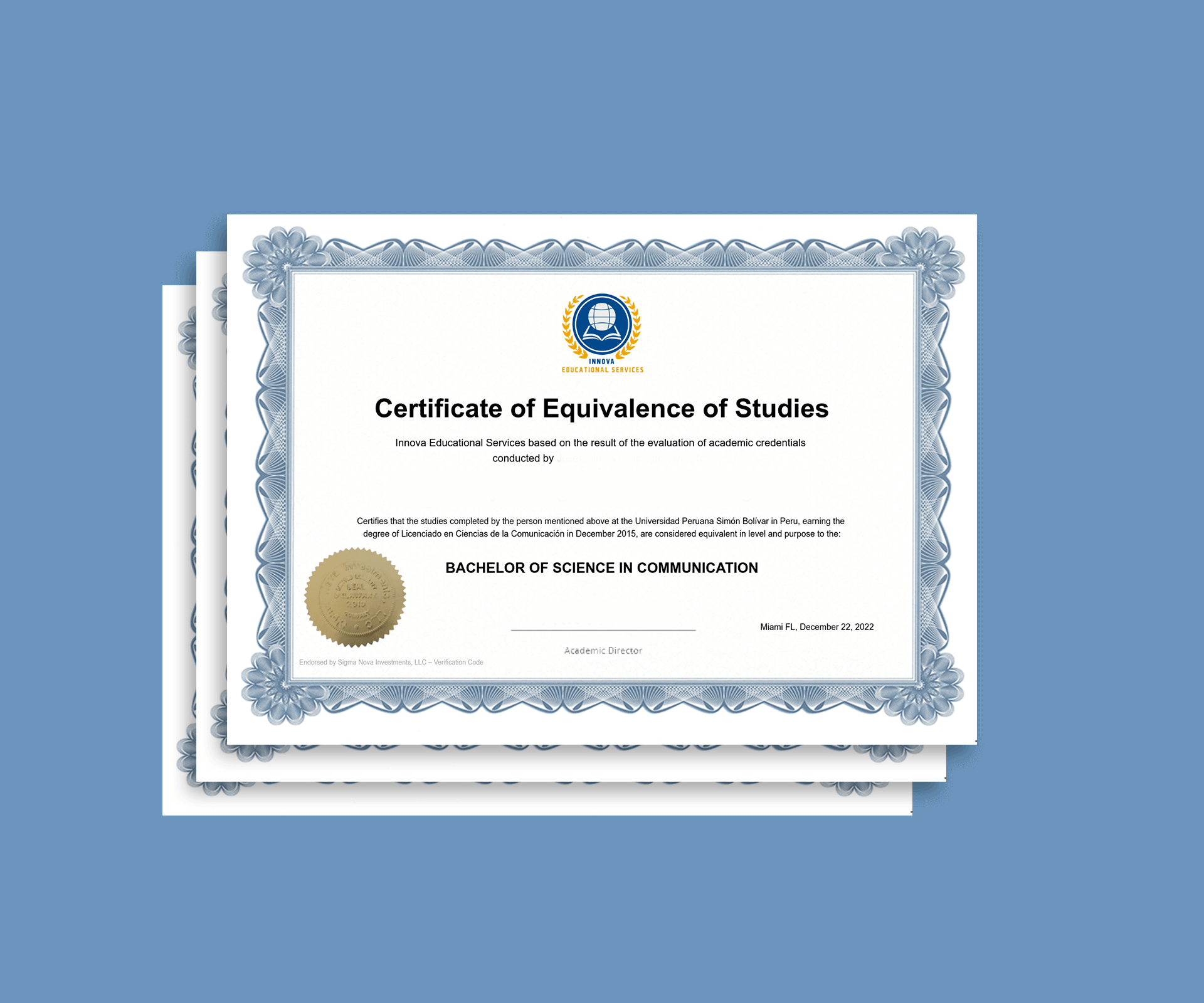
2. Academic Equivalency (Document-by-Document or Course-by-Course)
Academic equivalency goes beyond translation, since it involves a detailed analysis to determine how studies completed abroad compare with the U.S. education system.
Types of Evaluation:
- Document-by-Document: Evaluates the complete degree to identify its U.S. equivalent (for example, Bachelor’s Degree or Master’s Degree).
- Course-by-Course: Analyzes each subject taken, its credits, grades and class hours, establishing specific equivalencies. Ideal for university transfers or specialized academic programs.
Key Aspects:
- Purpose: To determine the official academic equivalent in the U.S. system.
- Performed by: Recognized agencies.
- Frequent uses: University admissions, professional licenses, credential validation for employers.
Important: Original documents and official translations, if they are in another language, must be submitted.
For more details on degree equivalency, see:
- https://innovaevaluations.org/equivalencia-de-titulos/
- https://innovaevaluations.org/evaluacion-institucional-universidades/
Comparison Table of Key Differences
| Feature | Official Translation | Academic Equivalency |
|---|---|---|
| Purpose | Translate the content into English | Determine the equivalent in the U.S. |
| Who performs it | Certified translator | Credential evaluation agency |
| Level of analysis | Literal, no academic analysis | Evaluation of the level of education and courses |
| Common uses | Immigration procedures, basic employment | Admissions, professional licenses |
| Requires academic analysis |  No |
 Yes |
| Validity in the U.S. | Only as supporting documentation | Official equivalency document |
Proof of Education Requirements for Federal Positions in the U.S.
For certain federal positions (for example, Civil Service, Expanded Professional Associates Program), applicants may need to submit proof of their education (such as copies of transcripts and diplomas) as part of the application. Proof of education requirements vary by program or position, so it is important for applicants to read carefully which documents are needed (for example, a high school diploma or GED certificate, a bachelor’s degree or a master’s degree).
For more information, visit:
- https://sites.ed.gov/international/recognition-of-foreign-qualifications/
- https://www.state.gov/global-community-liaison-office/family-member-employment/family-member-employment-in-the-d-c-area/evaluation-of-foreign-degrees/
Accepted Documents:
- Legible copies of transcripts from U.S. universities/colleges that include degrees earned (if applicable) and the courses completed.
- If requested, a copy of the diploma.
Foreign Education
Transcripts from studies completed abroad will not be accepted directly. Foreign education must be evaluated by a credential evaluation service in order to be recognized in the U.S.
Recognized Evaluation Agencies:
- National Association of Credential Evaluation Services (NACES)
- Association of International Credential Evaluators (AICE)
- The Association for International Credential Evaluation Professionals (TAICEP)
Applicants are responsible for the cost of these services, which varies depending on the complexity of the case and the documentation provided. The evaluation process can take from weeks to months.
Important:
- English translations of documents not written in English may be required before the evaluation.
- Credential evaluation reports must be included in the federal job application instead of foreign transcripts.
Conclusion
If you are planning to continue your studies, obtain a professional license or look for a job in the U.S., it is essential to identify whether you need an official translation or an academic equivalency evaluation. While translation is essential for linguistic understanding, academic equivalency is the crucial step to formally validate your educational credentials in the U.S. system.
At Innova Educational Services, we are here to guide you at every stage of the process. Contact us for personalized guidance and take the next step toward your academic and professional success in the U.S.!
The post Differences Between an Official Translation of a Foreign University Degree and a U.S. Academic Equivalency first appeared on Innova Educational Services.